Self-Build Exhibition Stands: What They Actually Cost You (and Save You)
Most exhibitors don't think about their stand until the invoice for professional installation lands on the desk. That's usually when self-build systems start looking a lot more attractive. Instead of paying a contractor to fly out, assemble, and dismantle a booth for a three-day show, you buy a stand once and your own team puts it up — this time and the next five times.
That said, self-build isn't automatically the cheaper or smarter choice for every company. It depends on how often you exhibit, how much your team can realistically handle on-site, and what kind of impression you need to make. Here's what's actually involved.
.What Is a Self-Build Exhibition Stand?
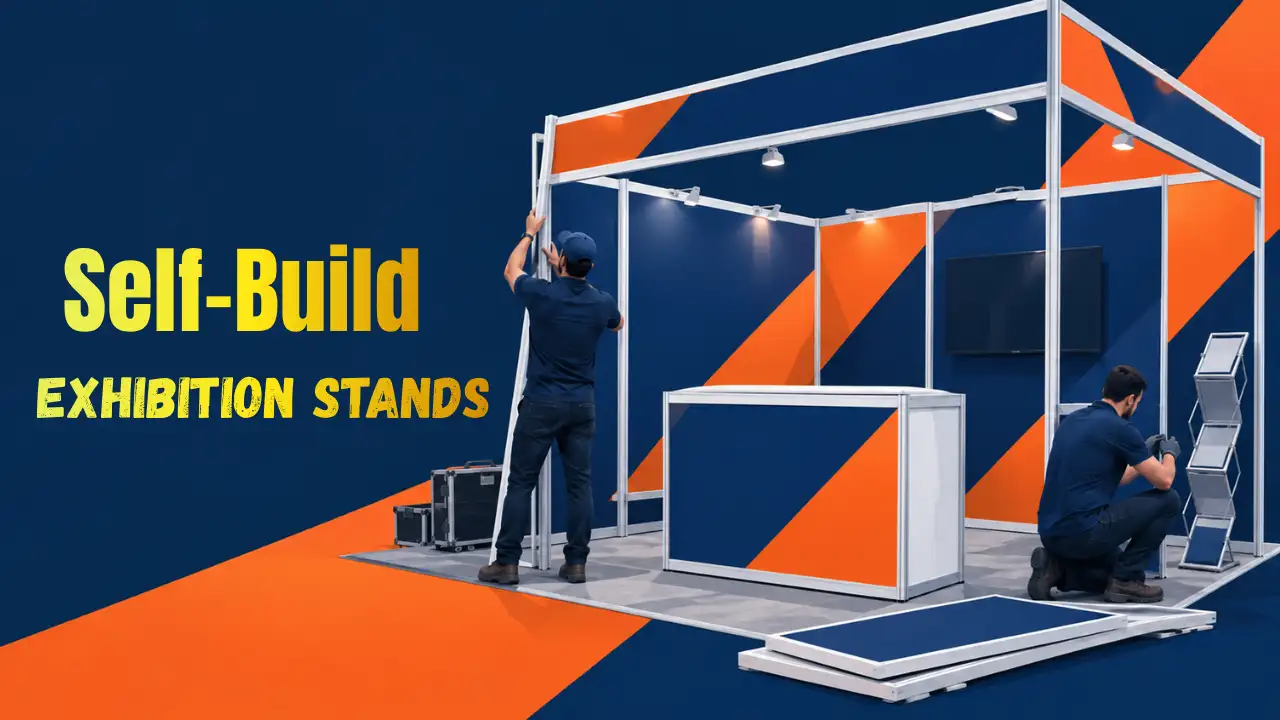
A self-build stand is a kit-based system — lightweight aluminium or fabric-tension frames, snap-together counters, shelving, and printed graphics panels — built specifically so no specialist crew is required to assemble it. Most systems pack into a handful of transit cases and can be put up by two or three people using printed instructions, sometimes in under two hours.
This is a different category from a fully custom exhibition stand, which is engineered, built, and installed by a contractor for one specific layout. Self-build systems trade some of that visual originality for portability and reuse. If you're still working out which category fits your event, this guide to exhibition stand types breaks down the main options side by side.
Why Exhibitors Move to Self-Build
Lower Cost Per Show
The biggest expense in a traditional stand isn't always the structure — it's the labour: a crew flown in to build it, then flown back to strike it. A self-build stand removes most of that line item. Because the frame gets reused at the next show, the cost per event drops further with every use. For a company doing four or five shows a year, the math adds up fast.
Faster Turnaround
Venue move-in windows are tight, and a stand that takes a full day to build eats into time you'd rather spend on final walkthroughs and product setup. Self-build systems are designed around speed — a trained two-person team can usually have the frame up, graphics hung, and furniture placed well before doors open.
Adaptable to Different Booth Sizes
Not every event gives you the same footprint. Modular components let you add or drop sections depending on what space you're allocated, so you're not commissioning a new structure every time your booth size changes. Browse a few exhibition stand ideas and you'll notice most modular layouts are built around this exact flexibility.
Reuse, Not Rebuild
The frame stays the same; only the graphics change. That means a product launch or rebrand just means reprinting panels, not commissioning a new stand from scratch — which is where the real long-term savings show up.
Is a Self-Build Stand the Right Call for You?
Self-build works best for companies with a busy events calendar and an in-house team willing to learn the assembly once. It's a strong fit for small and mid-sized businesses that need a professional presence without contractor fees attached to every show, and for marketing teams juggling multiple cities in one season — lightweight components travel far more easily than a bespoke build.
It's a weaker fit if you exhibit once a year at a flagship event and need something that looks unmistakably custom, or if your team has no spare capacity to manage a build on-site. In that case, a contracted exhibition stand builder handling design through installation will usually serve you better.
Before You Buy: What to Check
Team readiness—even a simple system needs a practice run. Do a dry build in your warehouse before the first live event.
Transport fit — confirm the packed cases actually fit your usual courier or vehicle; oversized cases quietly erase the cost savings.
Storage plan — clean components after every show and store them dry. Damaged graphics or bent frame joints are the most common reason stands get replaced early.
Venue requirements—check booth dimensions, access points, and power locations before you pack, not after you arrive.
Setting Up Without the Last-Minute Panic
Start with an inventory check before leaving for the venue—a missing bracket found on-site is the single most common cause of delayed builds. Follow the manufacturer's sequence rather than improvising: frame first, graphics next, furniture and equipment last. Once it's standing, test every connection, then check lighting and any digital displays before the hall opens to visitors.
Not sure which system suits your next show?
Talk to our team about portable and modular exhibition stands built for your booth size and travel schedule. Get a call back or view our recent stand builds.
Mistakes That Quietly Undermine a Self-Build Stand
The recurring one is skipping the practice build — teams assume the instructions will be enough and end up assembling under time pressure with a queue of visitors already forming. The second is overloading the display with products or messaging until the booth looks cluttered rather than confident. And the third is simply not checking booth measurements in advance, which turns a two-hour build into a three-hour improvisation. Our rundown of common booth-planning mistakes covers a few more worth avoiding before your next show.
Self-Build vs Custom: Which Actually Wins?
Neither is universally "better" — they solve different problems. Self-build wins on repeat cost and scheduling control if you're exhibiting often. A custom exhibition stand wins when the priority is a completely distinct design or a flagship-level visual impact, and you're willing to pay for professional installation to get it. The honest answer depends on your budget, how many shows you're doing this year, and how much your brand relies on a unique physical presence to stand out.
Getting More Out of the Stand You Already Have
Keep it clean between shows and brief your team properly — visitors respond to staff who know the product, not just the display behind them. Refresh graphics whenever your messaging changes rather than letting them go stale. And after each event, take ten minutes to note what worked and what didn't; small adjustments compound over a season of shows. If you want a fuller breakdown of what drives return on a stand investment, this piece on getting better ROI from your exhibition stand is worth a read, alongside a realistic look at what stands typically cost across Europe.
The Bottom Line
A self-build exhibition stand won't replace a fully custom build for every company, but for exhibitors doing several shows a year, it removes a recurring cost that adds up fast — installation labour — while keeping the finished look professional. Get the practice build in, plan storage properly, and the same frame can carry you through several seasons of events.